
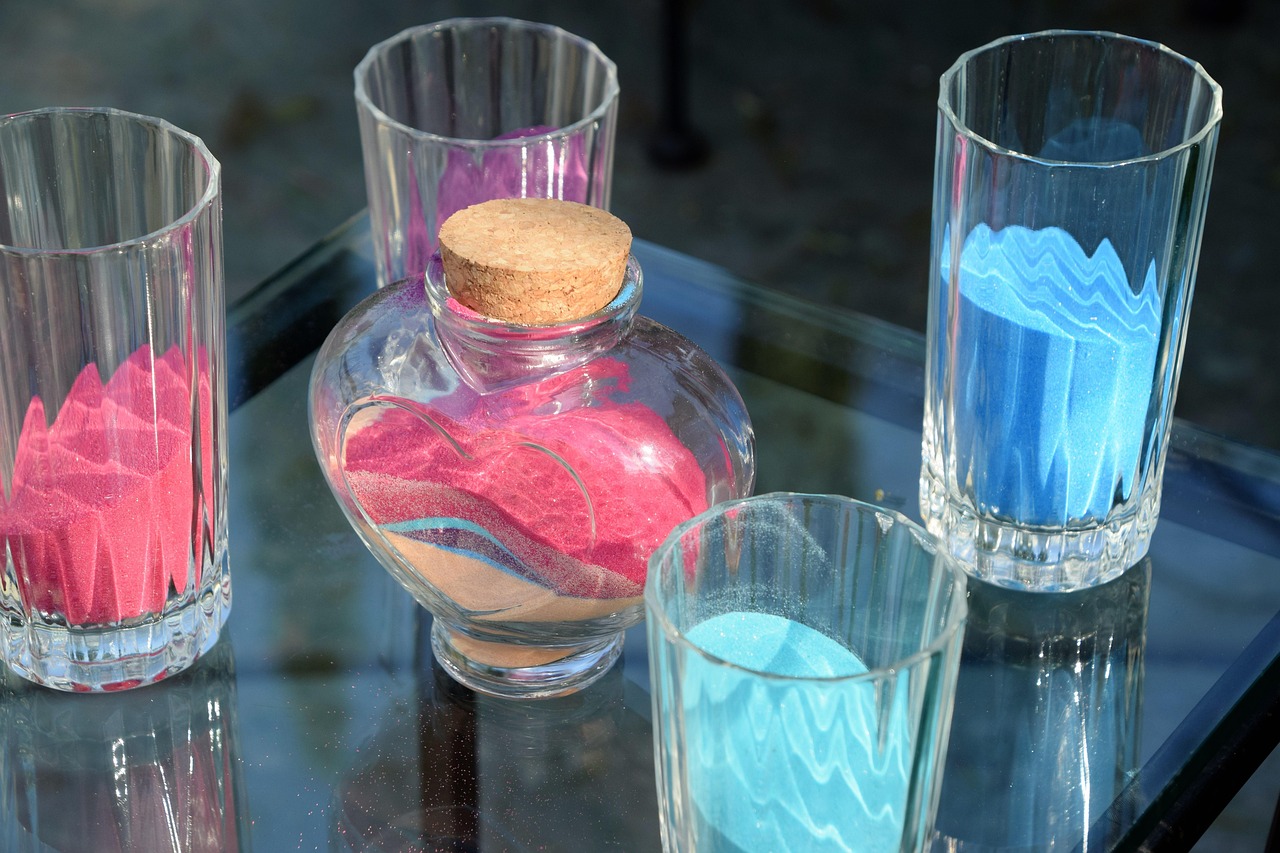
Symbolic rituals are a key part of many celebrant-led ceremonies.
You’ve got classic options like exchanging rings or drinking from a shared cup at a wedding, or lighting a candle at a funeral.
But there are also more contemporary rituals that have been developed to celebrate different occasions, such as the birth of a child or the expansion of a family.
A sand ceremony is one popular example of this.
Perhaps you’ve heard the words ‘sand ceremony’ when you’ve been starting to plan your wedding or naming day, or even witnessed one as a guest at someone else’s event.
Or perhaps (like I was before I became a celebrant), you’re totally perplexed as to what sand has to do with a ritual.
In either case, this article is going to explain what a sand ceremony is, how to perform one, how to personalise one, and the different occasions that they can be used for.

What is a Sand Ceremony?
A sand ceremony is a ritual that takes place as part of a wider ceremony, providing a symbolic series of actions that result in a lasting memento of the event.
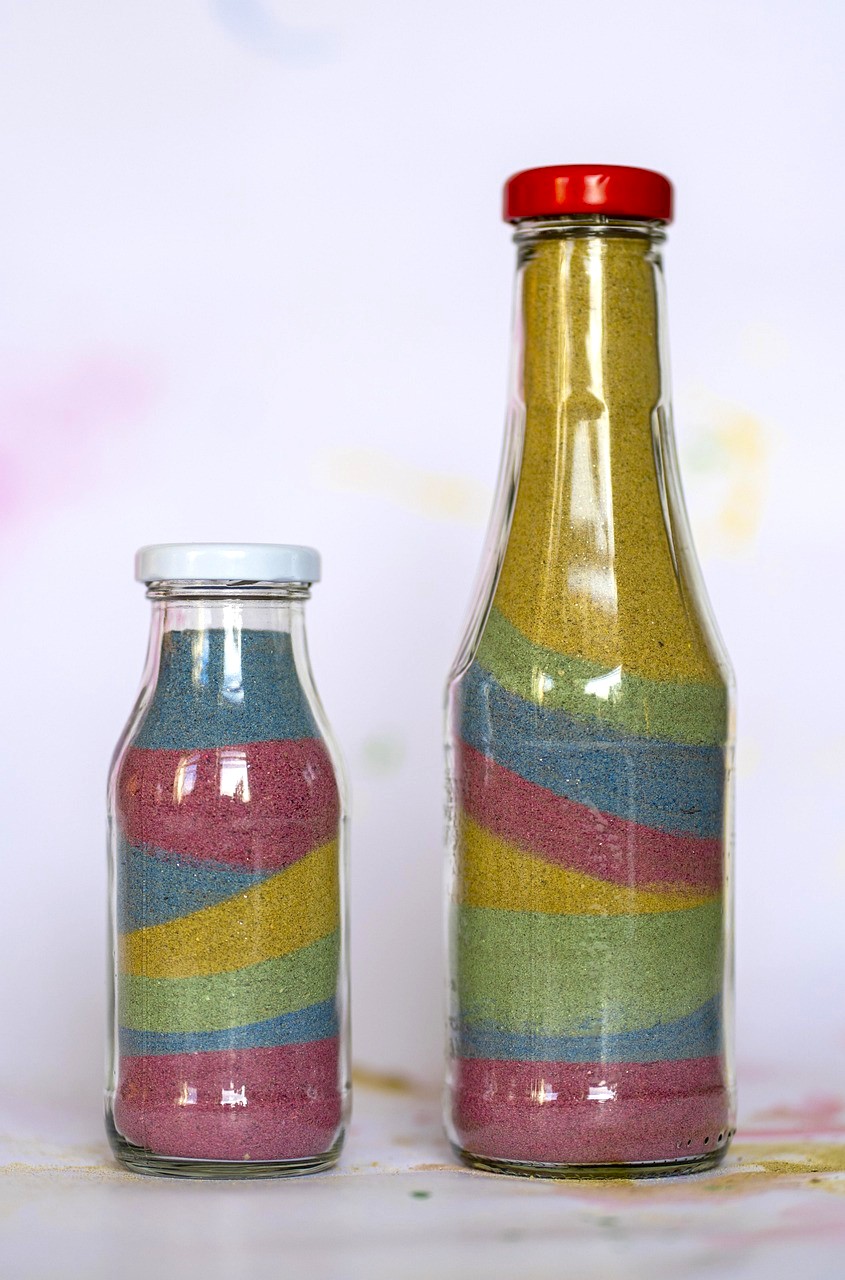
In a sand ceremony, several different colours of sand are selected, often with different personal meanings behind each one. These colours of sand are then poured into a new, empty vessel by the different people involved, creating a unique combination of colours and a permanent reminder of the ceremony.
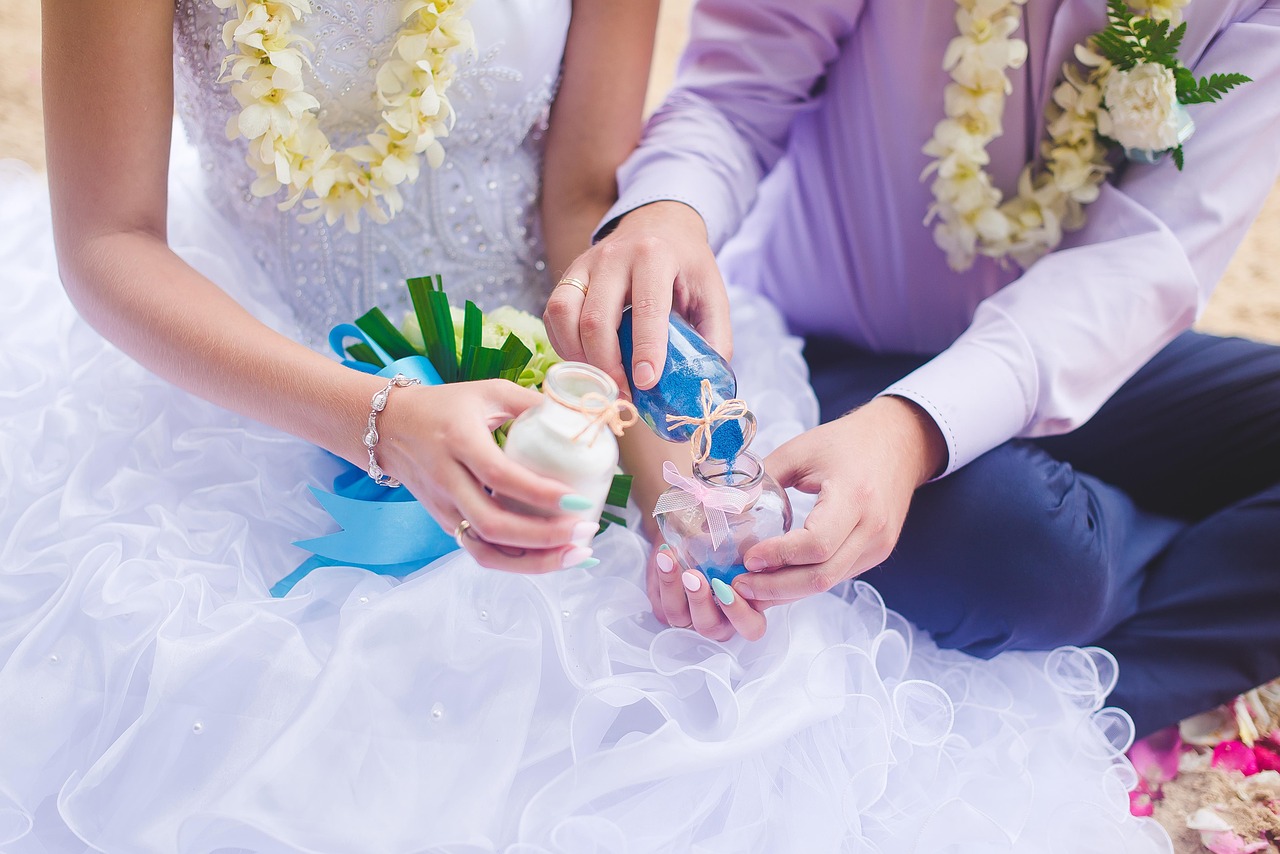
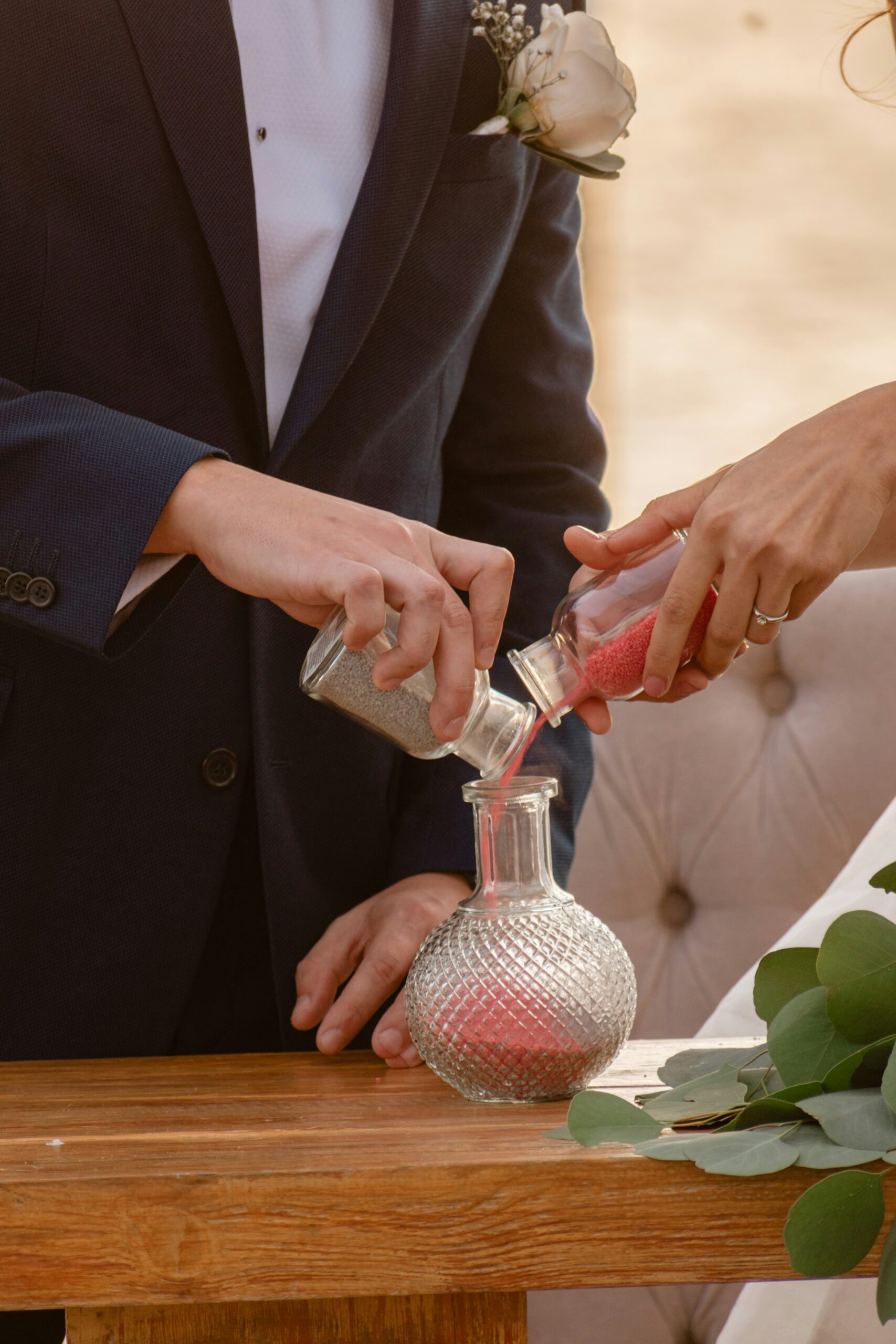
For a wedding sand ceremony, the couple usually has one colour each, which they will alternately pour. There might also be a third colour that represents their partnership or union, which is added as well.
Some couples also like to involve their children in a blended family sand ceremony as a way of showing that their marriage also includes their family. In this case, the children might each have their own colour as well, or there might be an additional colour chosen to represent the family unit.
Sand ceremonies are popular rituals at weddings, but they can also be used as part of a naming day ceremony or a blended family celebration. The process is the same; different colours are chosen to represent different people or things, and the sand is poured into a new vessel to create a unique and permanent reminder of the ceremony.
What makes a sand ceremony symbolic is the fact that the grains of sand are almost impossible to separate once they have been mixed together. For couples and families celebrating a union, this is a wonderful way to represent a permanent connection or unbreakable bond.
The mixing of coloured sand also produces unique patterns which would be incredibly difficult to recreate exactly. This can also symbolise how a couple or a family are unique in their union, and act as a reminder that the joining of different people can create something beautiful.
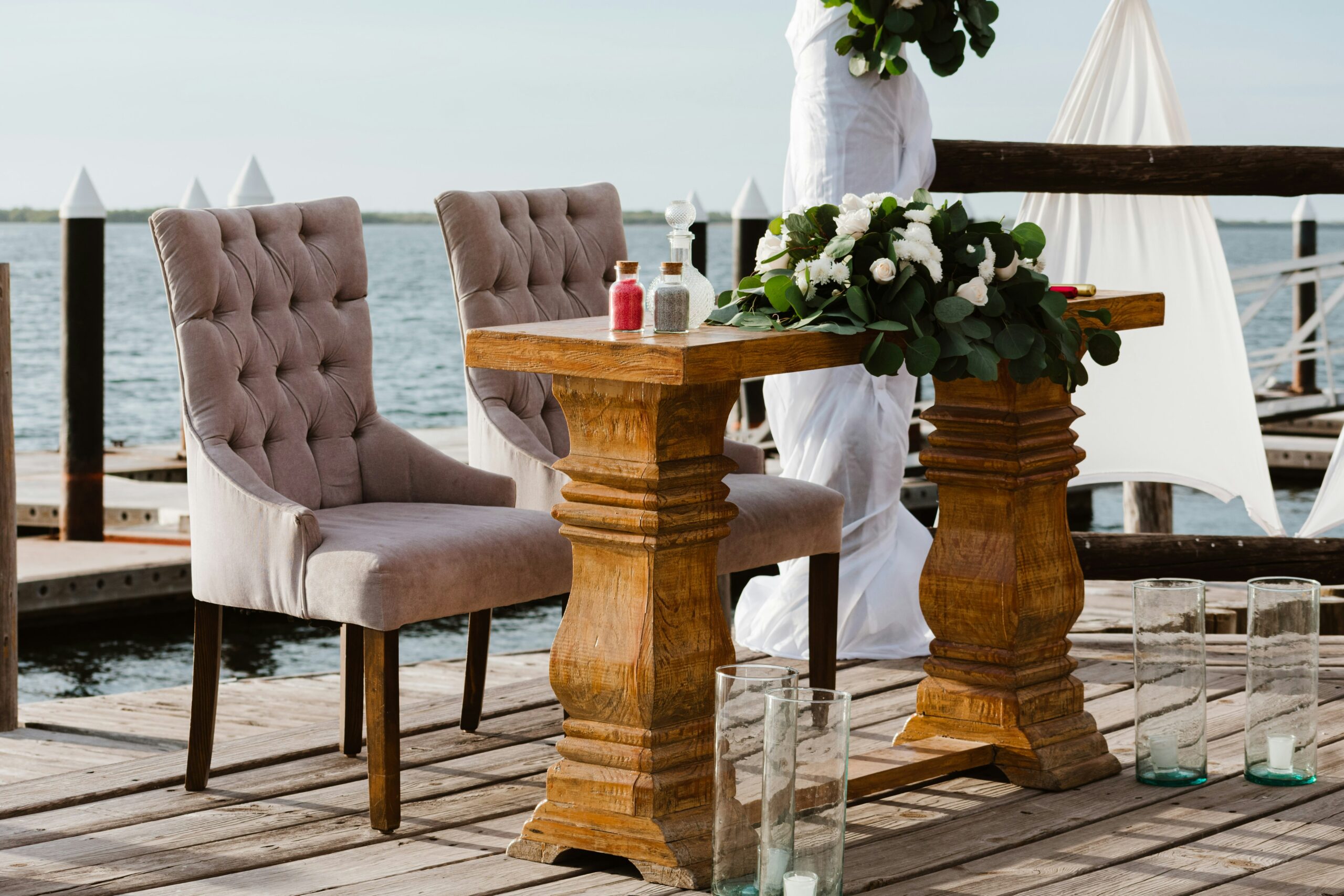
What Event is a Sand Ceremony For?
Since sand ceremonies represent the joining of individuals and blending of their lives, they are suitable for a range of different ceremonies. Here are some examples.
Weddings
A lot of couples like to include a sand ceremony in their wedding as a ritual that symbolising their union. As I’ve already talked about, it can be made even more meaningful if the couple’s children are involved, especially when the wedding marks two different families joining together.
Vow Renewals
In a similar vein, couples might choose to hold a sand ceremony as part of a vow renewal if they have had children together. By involving children and maybe also grandchildren, the sand ceremony becomes a ritual that symbolises all of the people who are connected because of the relationship.
Naming Day
Some families choose to include a sand ceremony as part of a naming day celebration that is held in honour of a new baby. It’s a great way to get existing siblings involved in the ceremony, using different colours for each member of the family.
Adoption Ceremony
When a family is welcoming an adopted child into their lives, some parents choose to make the occasion more special by organising an adoption ceremony or celebration that takes place after the legal elements have been finalised. Here, a blended family sand ceremony acts as a representation of the adopted child becoming a part of a new family, and again can involve as few or as many caregivers or siblings as you’d like.
How to Perform a Sand Ceremony
Sand ceremonies are usually led by the person who is in charge of the wider ceremony that it is part of. In many cases, they will be conducted by your celebrant, but in some cases, someone significant to the couple or family might be chosen to perform a sand ceremony for them.
Here’s what’s involved.
Introduction
As is the case with a lot of symbolic rituals, a sand ceremony script usually begins with an overview of what is going to take place, why the ceremony has been chosen, and what it represents.
Colour Explanation
If specific colours (or types) of sand have been chosen, the person leading the ceremony will often go on to explain the meaning behind the colours of each type of sand and why the couple or the family have chosen these colours.
Pouring
Next, the people involved in the ceremony will be invited to come and pour their sand into a new vessel. This is guided by the celebrant or person in charge, encouraging participants to take turns so that the end result is a pleasing mixture of shades.
Whilst you can pour colours one at a time, some sand ceremonies also have everyone pouring their sand in at the same time, so that a totally unique effect is created.
Presentation
Once all of the sand has been poured and the vessel has been filled, the person leading the ceremony will often show the guests the finishes result. This might be accompanied by a reminder of what the sand and the ceremony represented, and close with the fact that the vessel and sand are a permanent reminder of the event.
What Do the Colours of a Sand Ceremony Mean?
As we’ve already touched on, the sand used in a sand ceremony tends to be artificial and coloured, as this creates a more visually pleasing effect when mixed together.
Of course, you might want to do something different and instead choose actual sand from significant locations and mix this together. It might not look as vibrant, but still carries a lot of meaning and might be more your style.
Choosing coloured sand for your sand ceremony gives you the opportunity to attach particular meaning to the different sands that you mix together. Whether you choose traditional themes and associations with different colours, or decide on more personal links, it’s another way to make your ceremony even more bespoke.
How to Pick Colours for a Sand Ceremony
Choosing colours for a sand ceremony can be very personal, depending on how much meaning you want to attached to whatever you choose.
In some instances, participants just choose their favourite colours. In others, the wider meaning attributed to different shades is used as part of the selection process. And in some cases, you might choose colours just because they have a personal association.
If you’re wondering how to pick colours for a sand ceremony that you’re taking part in, here’s a list of popular colours and what they are often thought to represent.
Red
Love, passion, strength, prosperity
Orange
Kindness, encouragement, attractions
Yellow
Happiness, creativity, confidence
Green
Luck, health, nature
Blue
Peace, patience, longevity
Purple
Power, progress, healing
Pink
Romance, honour, truth
White
Remembrance, purity, devotion
Black
Empowerment, wisdom, success
Sand ceremonies are just one of many options that you have when it comes to designing a celebration led by a celebrant.
They’re not for everyone. So if you’ve read this and thought ‘no thank you’ then you’re not alone.
The good news is that there are plenty of other rituals for you to choose from!
Planning a Ceremony?
If you’re in the process of planning a celebration of love or of family, you might be thinking about including a sand ceremony.
In that case, I hope that this article has helped to give you a better idea of what’s involved and how you can personalise the ceremony for a number of occasions and situations.
For more ceremony ideas and inspiration, check out the rest of the articles on my blog.
And if you’re looking for a celebrant to lead your ceremony, I’d love to get involved! Take a look at what I offer, or find out more about me and my work.

Leave a Reply